

 See My Latest Article on HelloNation

Building a home involves different financing decisions than buying an existing house. The loan may need to cover land, plans, permits, construction costs, inspections, contingency funds, and the long-term mortgage. For residents of Kempner, TX, the right option depends on whether the land is already owned, how complete the plans are, the type of construction, and the borrower’s income, credit, assets, and eligibility for government-backed programs.
What is a construction loan?
A construction loan is generally a short-term loan that provides money in stages as a home is built. Instead of receiving the entire amount at once, the builder typically requests funds through scheduled “draws” after specific milestones, such as the foundation, framing, mechanical systems, and final completion.
The lender may require:
- A signed construction contract
- Detailed plans and specifications
- A fixed or carefully documented project budget
- An appraisal based on the proposed completed home
- Builder qualifications and insurance information
- A construction timeline
- A reserve for unexpected costs
Construction loans differ from ordinary purchase mortgages because the home is not yet complete and the lender is evaluating both the borrower and the project. The Consumer Financial Protection Bureau explains that these loans are often short-term and may either be paid off at the end of construction or converted into a longer-term mortgage. ([consumerfinance.gov](https://www.consumerfinance.gov/ask-cfpb/what-is-a-construction-loan-en-108/?utm_source=openai))
What is a construction-to-permanent loan?
A construction-to-permanent loan combines the building phase and the long-term mortgage into one financing arrangement. It is often called a single-close loan because the borrower generally closes once before construction begins.
During construction, loan funds are released according to the approved draw schedule. After the home is completed and required inspections are accepted, the loan changes to its permanent mortgage terms.
Potential advantages include:
- One primary loan application and closing
- Less risk of having to qualify for a second mortgage later
- Greater certainty about the permanent loan structure
- Possible reduction in duplicate closing costs
The tradeoff is that the lender must approve the project, budget, plans, builder, and borrower before work starts. Changes made during construction may require updated documentation, a new appraisal, additional cash, or lender approval.
How does a two-close construction loan work?
A two-close arrangement uses one loan for construction and a separate mortgage after the home is finished. The first loan pays for the building phase. Once construction is complete, the borrower applies for or closes a permanent mortgage that pays off the construction balance.
This structure may offer more flexibility because the borrower can compare permanent-loan options after completion. However, it also creates additional risks:
- The borrower may need to qualify twice.
- Interest rates may change before the permanent closing.
- The second lender may use a different appraisal or underwriting standards.
- The borrower may pay two sets of closing costs.
- A delay or cost overrun can complicate the transition.
A two-close loan should not be assumed to guarantee future financing. The permanent mortgage still depends on income, credit, debt obligations, property value, and lending conditions at that time.
Can a conventional mortgage finance a new build?
Yes, but the structure depends on the project. A conventional mortgage may be used to purchase a newly completed home from a builder, while a custom build usually requires construction financing before the home exists.
Some lenders offer conventional single-close construction-to-permanent loans. Others provide only interim construction loans or require the builder to finance the work and sell the completed home later.
For a conventional construction loan, the lender will usually review the borrower’s financial profile along with:
- The land purchase or current land value
- The construction contract
- Materials and finish schedules
- The projected value of the completed home
- The builder’s experience and financial documentation
- Cash reserves for changes, delays, and cost increases
A major issue is the appraisal. If the completed home is worth less than the total project cost, the borrower may need to provide additional funds or reduce the scope of construction.
Are FHA, USDA, or VA options available?
Government-backed programs may help eligible households, but availability varies by lender and by property.
FHA financing: Some lenders offer FHA construction-to-permanent financing for eligible borrowers. FHA underwriting may allow a lower down payment than some conventional options, but the borrower must meet program requirements and pay applicable mortgage insurance costs. Not every FHA lender offers construction financing.
USDA financing: Parts of the surrounding region may meet USDA property and income eligibility rules, but eligibility must be confirmed for the specific lot and household. USDA’s Single Family Housing Guaranteed Loan Program includes a single-close construction-to-permanent option through approved lenders. The program can provide up to 100% financing for qualified applicants and eligible properties, subject to program requirements. ([rd.usda.gov](https://www.rd.usda.gov/programs-services/single-family-housing-programs/single-family-housing-guaranteed-loan-program?utm_source=openai))
VA financing: Eligible veterans and service members may use VA-backed financing to build a home, but not every VA-approved lender offers construction loans. VA guidance describes both one-time-close and two-time-close structures, and the lender must manage the construction process, appraisal, inspections, builder documentation, and draw procedures. ([va.gov](https://www.va.gov/housing-assistance/home-loans/?utm_source=openai))
A VA loan may permit little or no down payment in qualifying situations, but that does not eliminate the need for cash reserves. Land costs, upgrades, deposits, change orders, and expenses outside the approved loan may still require personal funds.
What costs are easy to overlook?
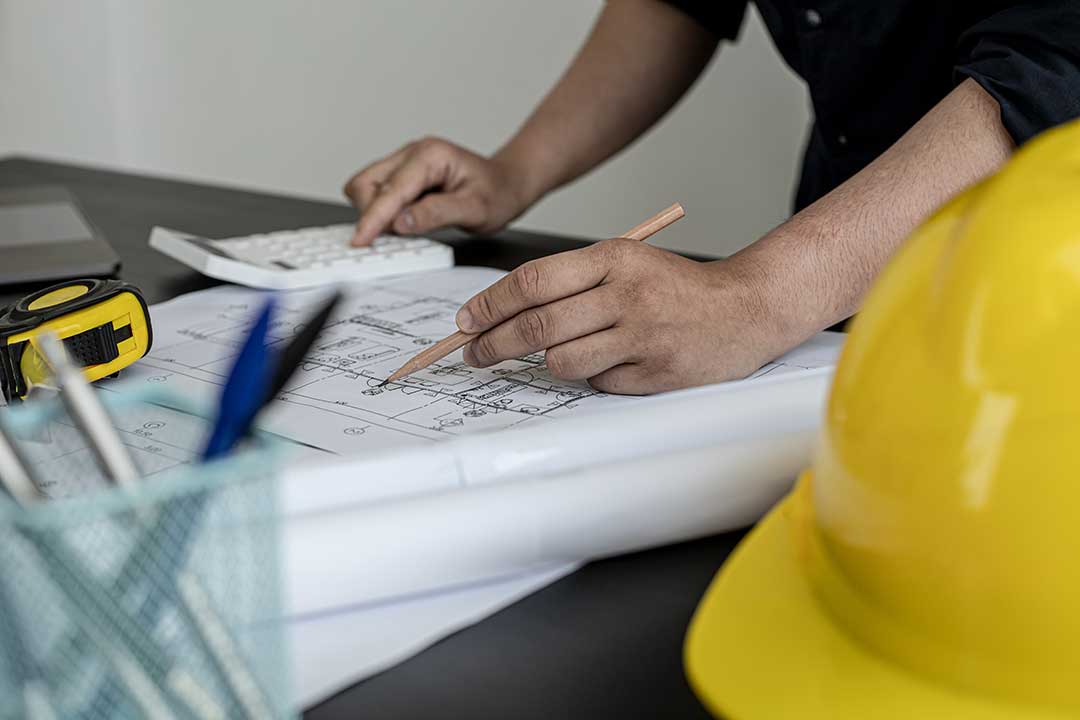
The building budget should include more than the floor plan and contractor’s estimate. In a semi-rural housing market, site conditions and utility access can have a substantial effect on the total cost.
Possible additional expenses include:
- Land surveys and title work
- Soil testing and site preparation
- Driveway or access-road work
- Water, wastewater, or utility connections
- Drainage improvements
- Permit and inspection fees
- Architectural or engineering revisions
- Temporary housing during construction
- Property taxes and insurance
- Appliance, landscaping, fencing, or window-covering allowances
- Change orders and construction delays
Hot summers, heavy rainfall, and periods of challenging site access can affect scheduling and materials. A realistic contingency reserve is especially useful when the lot requires significant preparation or the contract contains allowances rather than fixed prices.
What should borrowers compare between loan offers?
The interest rate is only one part of the comparison. Review the entire structure, including:
- Whether the loan is one-close or two-close
- Fixed or adjustable interest-rate terms
- Construction-phase interest payments
- Draw and inspection fees
- Required reserve funds
- Down payment and closing costs
- Rules for change orders
- Extension fees if construction runs late
- Conversion requirements after completion
- Prepayment penalties or balloon-payment provisions
- Whether land equity can count toward the borrower’s contribution
Ask how the lender handles an appraisal shortage. For example, if the project costs $425,000 but the completed appraisal supports only $400,000, the borrower may need to bring the difference in cash or revise the plans.
How can a borrower prepare before applying?
The strongest application usually begins with a complete project package rather than a rough estimate. Gather income records, asset statements, debt information, land documents, preliminary plans, the construction contract, and a detailed budget.
It is also wise to separate “must-have” features from upgrades that can be postponed. A screened porch, upgraded flooring, fencing, or extensive landscaping may be easier to add later than to finance during the initial build.
The most useful question is not simply, “How much can be borrowed?” It is, “What total monthly payment and construction budget remain manageable if the project takes longer or costs more than expected?” That answer should account for the mortgage, taxes, insurance, utilities, maintenance, and any temporary housing costs during construction.